· 3 min read
A packaged food manufacturer's 350-slide monthly report, automated in 4 weeks
A Philippine packaged food manufacturer digitized 100+ daily trade marketing requests and cut 12-15 hours of manual reporting a month, with a working system by Week 3.
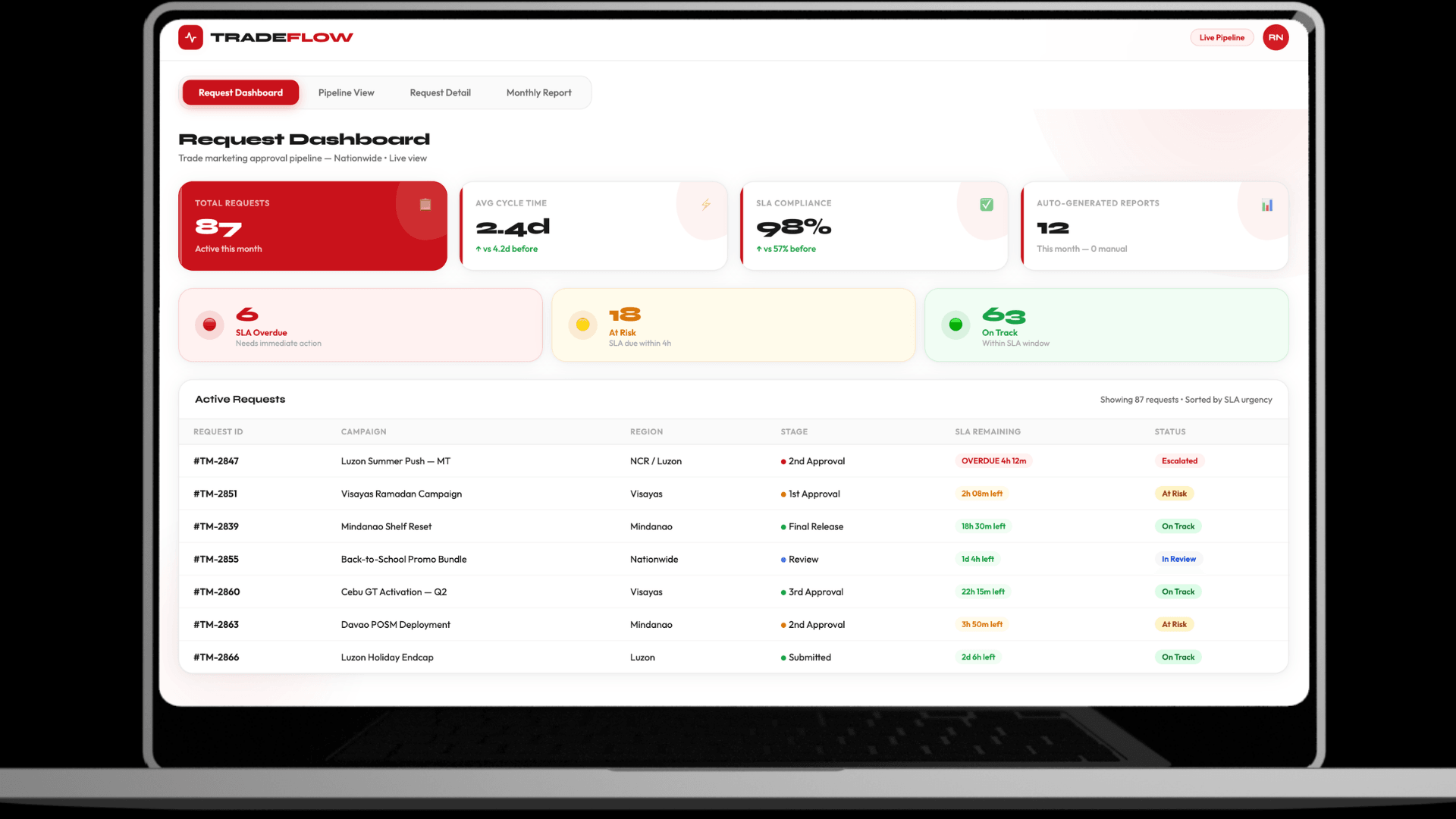
A regional packaged food manufacturer in the Philippines supplies 200+ supermarket and food service accounts, and it ran its whole trade marketing operation on Viber, email, physical signatures and parcel deliveries. One person spent 12-15 hours every month building a 350-slide report by hand, and that was only the most visible symptom.
By Week 3 their team had a working system to test and play around with. They logged in, tried the pipeline and saw it respond to real inputs. The 350 slides now generate automatically, the full working demo took 4 weeks, and 100+ daily requests are digitized. The engagement is ongoing, we add to it every sprint, and it runs on a monthly subscription with no large upfront payment.
This is one of two ongoing client engagements in different industries. Both ended up in the same place, with a working system in the client's hands by Week 3, and we are still building with both.
The problem
The company handles 50-100 trade marketing requests per day, covering product launches, supermarket promos and distributor activations. Every request needed 3 physical signatures before anything moved, and a rejection at any stage meant starting the chain again. Documents went by courier and were routinely lost. Suppliers with outstanding balances stopped quoting. One employee spent 12-15 hours every month putting together a 350-slide consolidated report by hand.
What we built
We built a 6-stage digital marketing operations pipeline with role-based access, SLA timers and approval workflows. Campaign requests are submitted, routed, approved and tracked in the system. A traffic-light dashboard shows cycle times and bottlenecks in real time. The 350-slide monthly report now generates itself from the same data, with no manual work.
How we work
There is no large upfront payment. The build runs on a monthly subscription, which an operations budget can absorb without a procurement cycle. Scope is signed off in Week 1, before any code is written. By Week 3 the client has a working system they can test, run real requests through and give feedback on, and we keep building after the demo.
The 5-week timeline
Week 1: Discovery
We mapped the full 6-stage approval chain, with every role, document type and bottleneck.
Weeks 2-3: Build
We built the system and handed it to the client by the end of Week 3. Their team logged in, played around with it and submitted test inputs on the working system itself.
Week 4: Full demo
The live system ran actual request volume, and the traffic-light dashboard showed cycle times for the first time.
Week 5: Ongoing rollout
We onboarded the broader team, and real request volume now flows through the pipeline. The engagement is ongoing, the monthly subscription is active, and we are still building together.
Results at Week 5
- 0 hours to build the monthly report, which now generates automatically from live data.
- A 6-stage digital pipeline in place of Viber, email and physical parcel delivery.
- The first working system reached the client in Week 3, and their team could log in, test the full workflow and submit real requests.
If your operations run on group chats and spreadsheets, let's talk, with no commitment and no strings attached. Book a quick call here.
More from the blog
March 26, 2026 · 2 min read
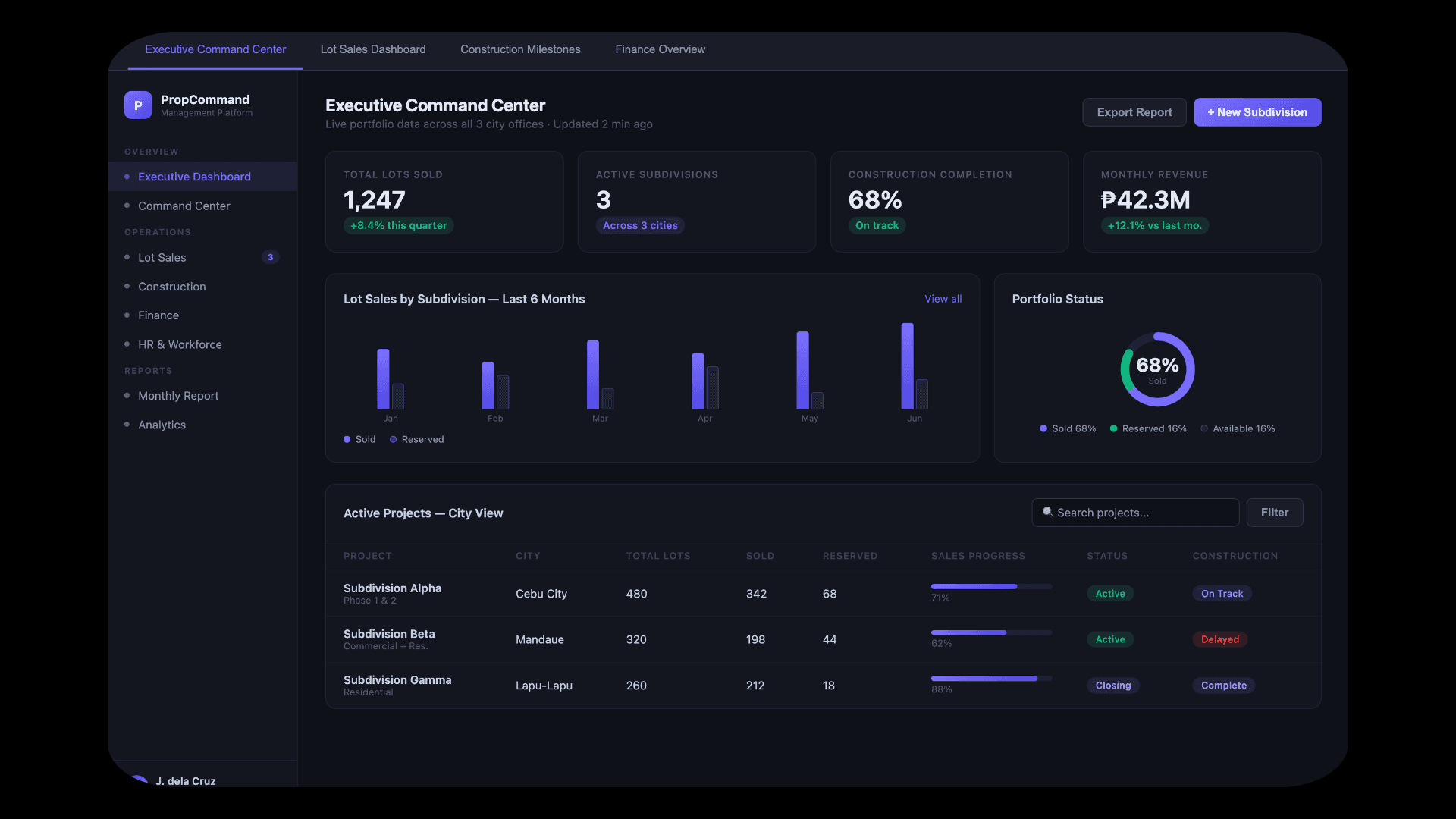
A property developer saw its whole business on one screen in Week 2, and signed
A horizontal and vertical developer got a custom management system built to their vision. We showed them a proof of concept in Week 2, they signed, and we are now building it.
March 4, 2026 · 3 min read
How Mount Fuji Lending uses Google Workspace
We helped Mount Fuji Lending use Google Workspace to manage lending documents, improve client response times, and support secure collaboration nationwide.

August 19, 2025 · 3 min read
The real cost of manual onboarding in BPOs
Manual onboarding in Philippine BPOs means bench time, burnout, security risks and no tracking. What it costs and how automating onboarding helps.