· 2 min read
How we ran a Consultative Design Thinking with DBM
Over two days, DBM stakeholders online and in person turned their pain points into How Might We questions, solution sketches and action items with Symph.

Last week we ran a Consultative Design Thinking with the Department of Budget and Management (DBM) in the Philippines. It was a hybrid session, with participants joining both online and in person.
A Design Thinking customized for DBM
A Design Thinking is an intensive, fast-paced and collaborative process that brings different stakeholders together to solve complex problems, come up with solutions and validate them with real users. For DBM we used a customized process without the prototype and validation stage, so we could spend more of the time understanding the users' needs and challenges and ideating first possible solutions. The goal was to gather the stakeholders' pain points and turn them into clear action items.
Day 1: Identifying challenges and ideating solutions
Our experts opened the day with Lightning Talks, and the audience wrote down "How Might We" (HMW) questions on physical and online post-it notes as they listened. Participants then split into groups to discuss the challenges they had identified and put them into the HMW framework.
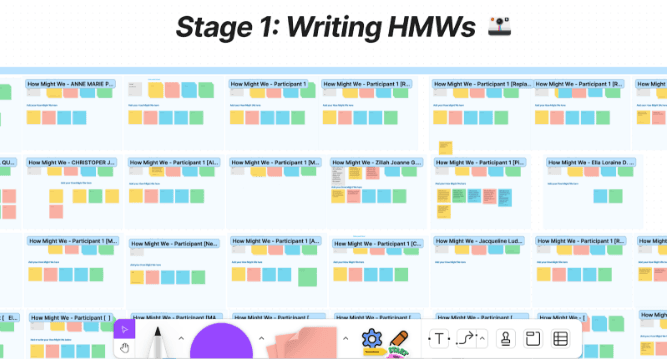
A snapshot of the virtual HMW board for the online session
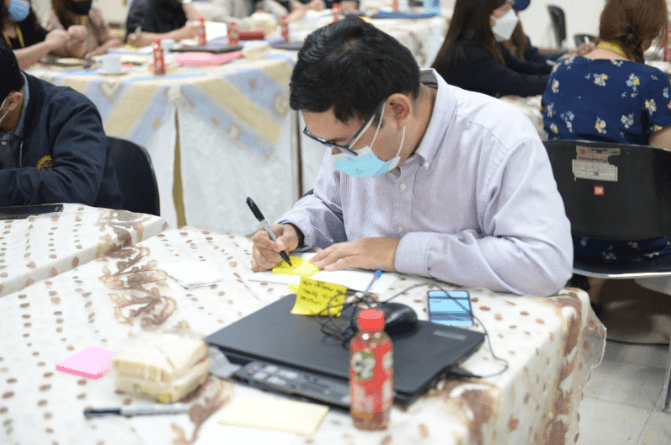
An in-person stakeholder writing their HMWs
Next, participants sorted the ideas into categories and looked for overlaps and duplicates, so the problem map would be as useful as possible. They revised or changed the categories as they went until they had a full picture of the challenges DBM faces.
They then voted for their top three HMW questions. The teams regrouped for an Inspiration-Finding session, looking for new approaches to the top-voted HMWs.
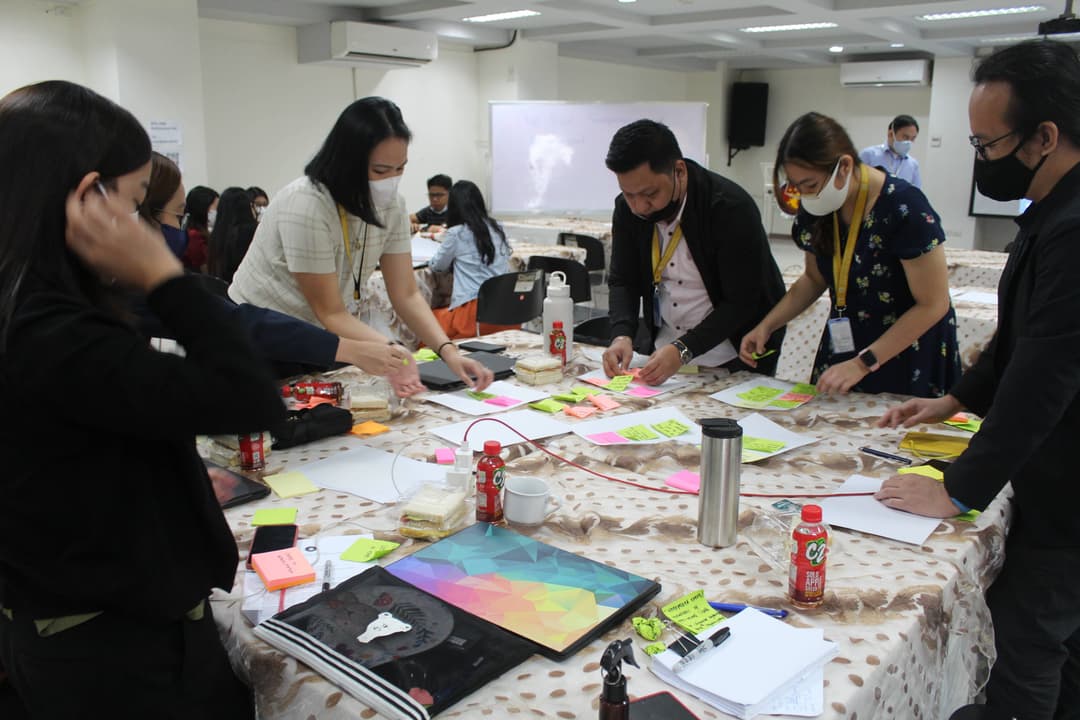
Groups discussing and mapping the HMWs
To get people thinking creatively, we ran a Crazy 8's exercise and then a Solution Sketch session, where participants drew out their ideas.
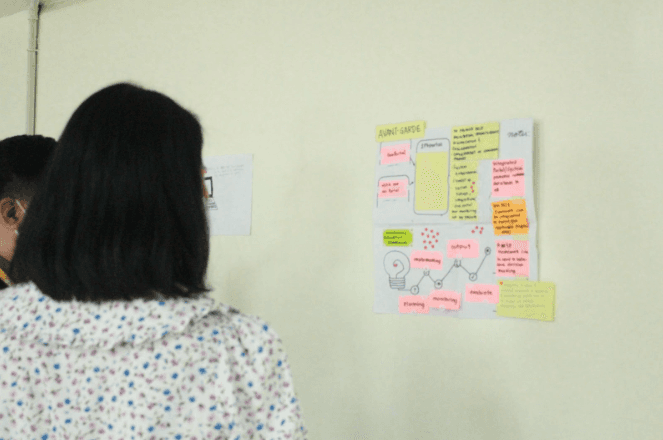
A solution ready for voting, posted on the wall
Day 2: Refining solutions and presenting them
Day two started with Intersecting Sections. All the solution sketches went up on the wall, and participants had unlimited votes to place on the elements of the designs they found most compelling.
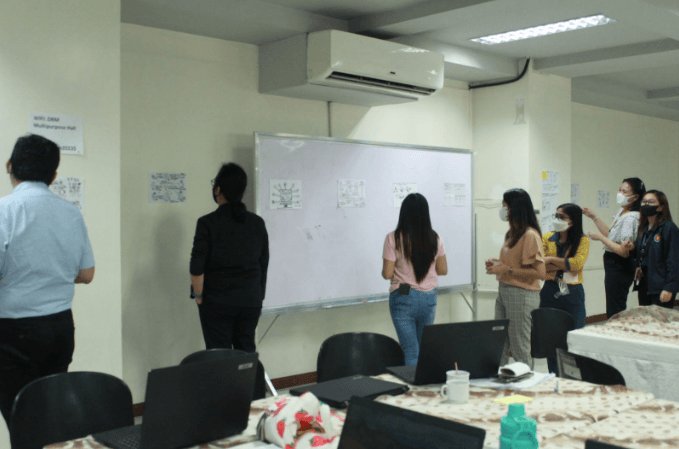
Voting session for the components of Solution Sketches
After reviewing the winning scenes, the teams regrouped and wove them together into one final solution sketch, so the best ideas from each team made it into the final solutions.
The online and in-person groups both presented their final solution sketches to the whole audience, and everyone scored the presentations to rank how important each solution was.
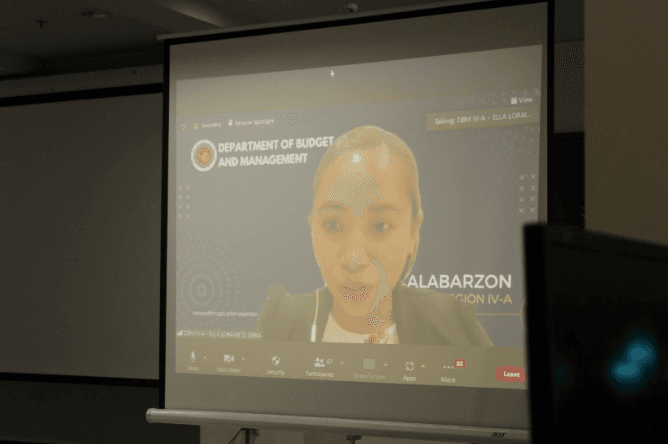
Representative from the Online participants during the presentation
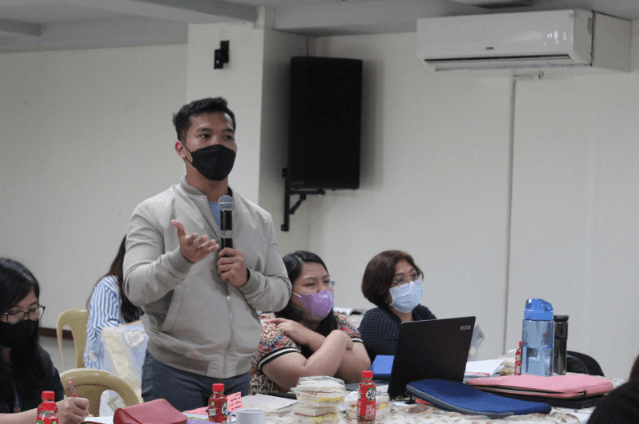
Representative from the In-person participants during the presentation
If you need help running design sprints for your team, talk to us and we will see how we can help.
More from the blog
March 30, 2023 · 3 min read
How we helped ASPS Motor Sales digitalize their supply chain tracking
ASPS Motor Sales tracked inventory across many spreadsheets. We built a system that shows each unit on one screen and cuts manual searching.

March 15, 2023 · 2 min read
How Milksha Philippines launched its website in 2 weeks
We designed, built, tested and launched the Milksha Philippines website on Webflow in 2 weeks.

March 2, 2023 · 3 min read
How to deal with the fear of founding a company
Founding a startup is scary. Three habits help: step back and introspect, think like a scientist, and listen to your customers.